top of page

Updated: Mar 10


There is a line in a RUSH song that captures something quietly troubling about modern education:

“All the world’s indeed a stage And we are merely players, Performers and portrayers, Each another’s audience outside the gilded cage.”

The phrase lingers: outside the gilded cage.

From the outside, the cage shines. It looks golden, impressive, enviable. But a cage, however beautiful, is still a cage.

In many places today, education has begun to resemble a kind of performance. Students are encouraged to build portfolios, collect achievements, and shape narratives about who they are LONG before they have had the chance to discover who they might become. Activities are chosen not only for their intrinsic value, but for how they will appear to future audiences.

Children learn quickly that someone is always watching; teachers, rankings, institutions. The world. And when 'watching' is perceived, 'judgment' is perceived to go hand in hand with it. The pressure can be strong to begin organizing learning around the expectations of others. Curiosity becomes muted. Exploration becomes risky. The goal shifts quietly, internally, from discovery to meeting perceived expectations. To performance. Education can mutate into a performative endeavor, putting a damper on genuine enthusiasm.

And so the cage forms.

From the outside, it looks extraordinary: impressive projects, polished accomplishments, carefully constructed identities. But the student inside may feel something different. When interests are shaped too early by external expectations, the freedom to wander intellectually can begin to narrow.

Yet real learning rarely unfolds that way.

Curiosity is messy. It changes direction. A student might spend months fascinated by astronomy before discovering a love of history, mathematics, ecology, or literature. These shifts are not distractions from education; they are the process itself. Through exploration, students begin to recognize patterns in their own thinking. They discover the questions that genuinely hold their attention.

Foundations matter. We can't just spend all our time where the wild things are. Students need strong, faoundational skills in language, mathematics, science, and the humanities. They need to encounter complex ideas and wrestle with difficult problems. But within that structure, they also need the freedom to explore widely and to pursue emerging interests without feeling that every choice must serve a future narrative.

Education, at its best, is not a performance. It is the gradual formation of a mind: one that can ask meaningful questions, weigh evidence, think across disciplines, and follow curiosity wherever it leads.

The spotlight may always exist (and beware the dreaded scopophobia). That's life. There will always be audiences, expectations, and institutions evaluating the paths young people take. But the deeper purpose of learning - those golden, swift-moving years of learning - cannot be to perform for observers outside the cage.

The process of discovering one’s intellectual identity is exploratory by nature. Yet when this process is abandoned, the results are likely to lead to an unsatisfactory conclusion. Arthur Miller already ran this experiment for us.

In Death of a Salesman, Willy Loman spends his life believing success comes from looking successful. Being well liked. Being impressive in the eyes of others. The appearance of achievement becomes more important than the substance of it.

That illusion infects how he raises his sons.

He pushes his sons, Biff and Happy, to chase recognition instead of developing real competence or self knowledge. Biff is praised for popularity rather than discipline. The result is predictable: when the performance stops working, the identity collapses.

The tragedy is not that Willy aimed high. The tragedy is that he confused external validation with genuine development. We see this phenomenon playing out all over the world, at the highest levels of social organization.

When education becomes about crafting an impressive narrative for observers, students can start performing a version of themselves that wins approval but may not match their real interests or abilities. It looks successful from the outside. Inside, the structure is fragile.

Miller’s play is basically a warning about what happens when a culture turns life into a résumé instead of a process of becoming.

Willy Loman is the adult endpoint of that logic. A man who spent decades performing success and eventually realizes he never built the thing the performance was supposed to represent.


By association, we need to look at 'lifelong learning' - a promotional phrase that is de rigueur in education circles across the globe. Realistically, lifelong learning is often something adults return to later in life. You simply cannot tell a 14 year old that they are embarking on a process of 'lifelong learning'. It means nothing to them at that juncture. However, it's a pleasant idea for adulthood and can truly be a source of joy as the years roll by.

Now let's give this the proper context for students. It is not a concept that should be blasted from bullhorns at teacher conventions. It is silent. It is fragile. And it needs to be embedded with the utmost delicacy.

Learning begins the moment we arrive in the world. Curiosity is the natural state of childhood. The problem is not that young people fail to seek knowledge. The problem is that systems sometimes narrow that search too early, requiring students to trade exploration for performance. When this pressure - this tension - arises, why on earth would a student be compelled to want to devote her life to it?

Lifelong learning should mean something simpler and far more profound, and must be allowed its privacy without fear of judgment.

From the beginning of life to the end of it, we are gathering tools. Concepts. Skills. Languages. Ways of thinking. Each one another chisel added to the kit. And we should never ask students to throw away any of their chisels. They belong to them.

Those chisels allow us to shape something slowly over time: an understanding of the world and, eventually, an understanding of ourselves. This level of delicacy cannot be accomplished with a jackhammer. It must be brought into the light gently and organically - without fanfare - not unlike getting a stray kitten hiding under a car to come to you.
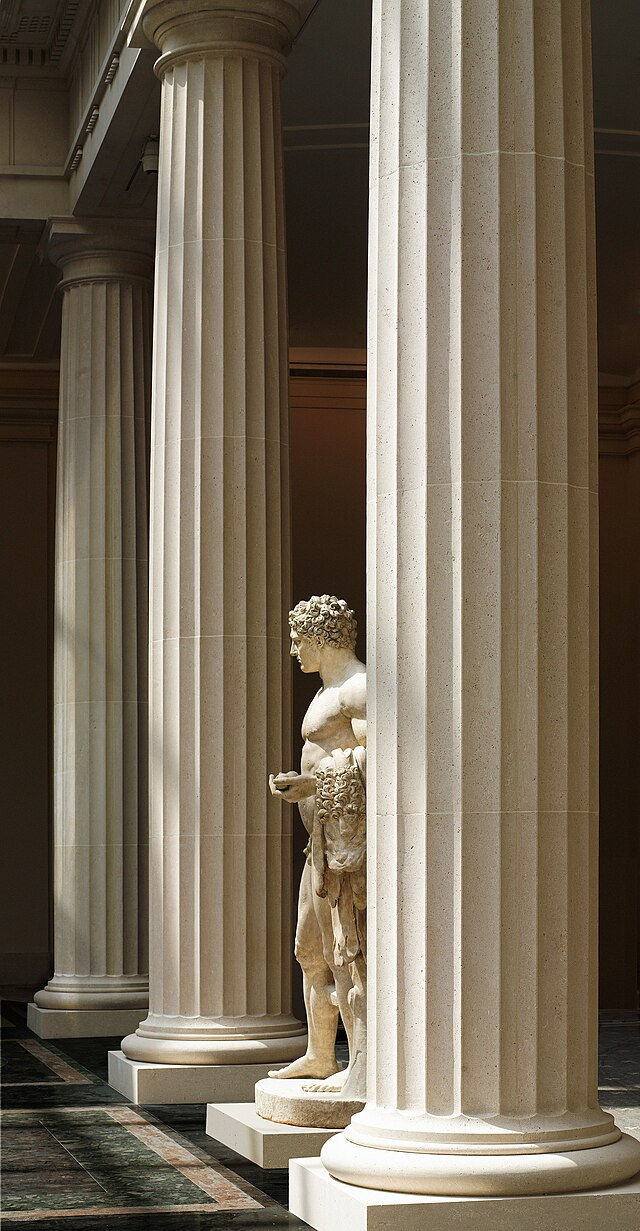
Education should expand that self-mastery toolkit, not shrink it. It should encourage students to keep picking up new instruments of thought, not ask them to set them aside because the expectations of the moment demand a particular performance.

In short, a life well lived is not a résumé assembled for an audience. It is a mind built upon the natural impulse towards eclectic intelligence. It is a mind continually at work, carving its way toward clarity. And thus it finds (along with the heart, Joseph Campbell would surely remind us) its aligned purpose in the world. And it breathes contentedly.


Finally, by way of an example, let's imagine what we'd be missing here in our dear world if the detractors of the lifelong interests of one C.S. Lewis had convinced him in his youth that he needed to shape up and fly right.


Critics who treat 'adult' as a term of approval, instead of as a merely descriptive term, cannot be adult themselves. To be concerned about being grown up, to admire the grown up because it is grown up, to blush at the suspicion of being childish; these things are the marks of childhood and adolescence. And in childhood and adolescence they are, in moderation, healthy symptoms. Young things ought to want to grow. But to carry on into middle life or even into early manhood this concern about being adult is a mark of really arrested development. When I was ten, I read fairy tales in secret and would have been ashamed if I had been found doing so. Now that I am fifty I read them openly. When I became a man I put away childish things, including the fear of childishness and the desire to be very grown up. ~ C.S. Lewis


(P.S. - "Hey! Teacher! Leave them kids alone!")


There is a great deal of conversation today about systems thinking and design thinking. Both matter.

Students should understand how complex systems function. They should be able to map relationships, identify feedback loops, and recognize leverage points. They should be able to design responsibly within constraints, while also having the freedom to question those constraints. They should test solutions, revise them, and improve them.

At TPA, we do these things.

But if education stops there, it misses something essential.

Systems thinking studies the world.

Design thinking improves the world.

Neither, on its own, truly examines the human being operating inside that world.

That is where Disciplined Demystification begins.

A World of Shadows

Plato described human beings chained inside a cave, watching shadows projected on a wall. The shadows become their reality because it is all they have ever seen. When one person turns toward the light, the adjustment is painful. When he returns to tell the others, they resist him. It is an ancient metaphor. It is also modern.

We live in an age of mediation. Information is filtered. Feeds are optimized. Images are enhanced. Language is increasingly generated. False representations are everywhere.

This is not hysteria. It is simply the structure of contemporary life.

Artificial systems are extraordinarily good at producing shadows. They generate summaries, arguments, projections, simulations. Often useful. Often impressive. Sometimes incomplete. Sometimes dangerous.

The danger is not technology itself. The danger is mistaking representation for reality and then thoughtlessly adopting it as our guidinhg star. Education cannot remove students from a world of shadows. But it can train them to recognize shadows as shadows. That requires discipline.

Pulling Back the Curtain

There is a moment in The Wizard of Oz when Toto pulls back the curtain and reveals the mechanism behind the spectacle. The Wizard is not supernatural. He is a man using amplification and projection. We are seeing more and more of this in today's world, in a panoply of contexts.


That scene is not destructive. It is clarifying. Carefully crafted education cultivates the instinct to clarify.


Who built this structure? What incentives are operating? What assumptions are embedded? What might be missing?

These are not cynical questions. They are stabilizing questions. When students learn to examine systems calmly, they are less likely to be consumed by them.

Leaving the Palace

The story of Siddhartha tells of a prince shielded from suffering. His environment was curated to protect him from discomfort. When he steps beyond the palace walls, illusion dissolves. Awareness begins.

Every generation builds palaces of comfort. Today they are digital, cultural, institutional. It is easy to remain insulated. It is easy to consume representations of life rather than confront life itself.


Disciplined Demystification invites students to step outside the palace walls.

Not to reject the world, but to see it clearly.

Why Systems and Design Are Not Enough

Systems thinking helps students map complexity. Design thinking helps them solve problems. But neither automatically trains self examination.

History is full of brilliant system designers who never questioned their own motives. Full of efficient institutions that never examined their moral foundations.

If students are trained only to optimize systems, they may become skilled architects of whatever structure they inherit. But education must go further.

Students must also ask:

Why do people seek power? How does fear shape decision making? When a person privately accumulates more wealth than some nations, why do some of them not use it to benefit the many? Why do groups conform? What biases influence my own thinking?

This is not abstract philosophy. It is intellectual protection. If artificial systems can produce information faster than we can, then the human advantage shifts to discernment. Judgment. Moral clarity. Those cannot be outsourced.

Foundations First

Let me be clear. Our primary responsibility is the acquisition of essential knowledge and skills.


Students must read deeply and analytically. They must write clearly and persuasively. They must master mathematical reasoning. They must understand scientific method. They must know history, geography, economics, and literature.

There is no substitute for disciplined academic work.

Disciplined Demystification does not replace content. It strengthens it.

If you imagine education as a mannequin, the mannequin must be solid so that it can support personalized refinements later.


Concept mastery. Structured progression. Clear expectations. Rigorous feedback.

Mathematics, for example, can be taught carefully and sequentially, drawing from proven instructional strategies such as those developed in high performing East Asian systems. Students build from concrete understanding to visual modeling to abstract reasoning. They explain their thinking. They justify conclusions. They develop number sense and probabilistic awareness.

Writing is revised and sharpened. Claims require evidence. Arguments require structure. Scientific reasoning is practiced through observation, hypothesis, testing, and revision. This is not vague inquiry. It is disciplined formation.

Application Is Where It Comes Alive

Once the form is strong, the fabric matters.

We do not teach mathematics as isolated procedure. We apply it to sustainability models, resource allocation, risk assessment, and real world trade offs.

We do not teach history as memorized dates. We apply it to questions of governance, power, and civic responsibility.

We do not teach writing as formula. We apply it to argument, defense, and articulation.

The fabric is drawn from global challenges. From ecological systems. From economic realities. From ethical tensions. And woven through it is Disciplined Demystification.


Students learn to analyze systems. They also learn to question assumptions. They learn to examine both structure and self.


The Inward Turn

Disciplined Demystification has two movements.


The first is outward. Examine systems. Analyze structures. Evaluate evidence.

The second is inward. Identify bias. Reflect on motive. Revise thinking.


This is where classical inquiry remains essential. Plato asked what it means to 'know'. Rousseau questioned civilization’s effects on the human soul. Machiavelli examined power without sentimentality.

These thinkers are not relics. They are training grounds for judgment.

Students do not need to read them in full at age ten. But they can begin practicing the habits those thinkers represent.

How do we know this is true? What assumptions are present? What might happen next? Where might I be wrong?


Those questions scale with age.

What This Looks Like for Young Minds

This is not abstract theory delivered from a lectern. For younger students, it begins with structure and clarity. Explain your reasoning. Support your claim. Test your idea. Consider another perspective.

As students mature, the questions deepen. What are the trade offs? Who benefits? What happens next? What bias might be influencing this conclusion?

The scaffolding remains. The depth increases.

Rigor does not mean joylessness. Humor is one of humankind's greatest info-delivery methods. Education can be disciplined and energizing at the same time. Learning here is conversation. Modeling. Revision. Debate at an appropriate level. Shared inquiry.

Students are often underestimated. Pacing guides and textbooks frequently define what they are presumed ready to understand. In practice, young people are capable of far more than they are invited to attempt and we honor that every day.

We parse complexity. We scaffold carefully. But we do not shrink the intellectual world unnecessarily. We trust the students.

Why We Require a Defense of Learning

Every six weeks, each student records a videotaped Defense of Learning.

We do this because growth in thinking must become visible.


We want to see cognitive development over time. Stronger reasoning. Clearer structure. More precise vocabulary. Increased confidence. A Defense of Learning is not performance. It is articulation. Students explain what they have learned. They justify conclusions. They reflect on how their thinking evolved. They identify revisions.

There is no “I” in team, but there is in 'idea'. Ideas are shaped in cohort, challenged respectfully, refined together. There is also no “wrong” in “my thinking” when that thinking is structured, honest, and open to revision.


We are not looking for perfection. We are looking for growth. Over time, the arc becomes visible. Tentative articulation becomes structured explanation. Hesitation becomes measured confidence. That is real development.


Not Cynicism. Not Rebellion.

Disciplined Demystification is not anti technology. It is not anti modernity. It is not nostalgic. It is simply a disciplined way of looking.


We seek young people who can pull back curtains calmly. Who can distinguish models from reality. Who can analyze systems without being consumed by them. Who can examine themselves as carefully as they examine the world.


Every era produces new shadows. Every generation must learn to see. That is the work.


At Promontory, assessment is not a single test score. It is a record of growth.

We use a formative system called the Global Brain Trust, or GBT. Students earn visible GBT points through structured academic challenges that increase in rigor and independence.

Each task is organized into five levels:

Lhasa / Basecamp 1 / Basecamp 2 / Ascent / Summit

These levels represent increasing depth of thinking, precision, and independence. They are not arbitrary. They reflect the quality of reasoning demonstrated.


Lhasa work shows foundational understanding.Summit work reflects advanced reasoning, synthesis, and intellectual maturity.


Each level carries a defined point value. Students see, in real time, how their effort and performance translate into measurable academic progress. This transparency promotes ownership.

However, GBT points are only one part of the system.

Teachers maintain detailed narrative notes. These notes document patterns in reasoning, clarity of expression, intellectual risk-taking, collaboration, and persistence. Numbers alone cannot capture growth. Narrative feedback provides context and direction.

Students also participate in a structured Defense of Learning process. At key points during the year, they present and defend their work. They explain their thinking, justify their conclusions, and reflect on their development. This is not performance for spectacle. It is intellectual accountability.


Together, these elements create a balanced system:

Quantitative markers through GBT points. Qualitative insight through teacher narrative. Public reasoning through Defense of Learning.

Over time, accumulated GBT performance can be translated into traditional grading equivalents when required for transcripts or transitions. Families receive clear documentation. There is no ambiguity about academic standing.

But the culture is different from a conventional grading model.

We do not reward minimal compliance. We do not inflate scores for effort alone. We expect students to attempt their best work the first time, and we support them in reaching that standard.

Assessment at Promontory is not about sorting students. It is about strengthening judgment, responsibility, and clarity of thought.

The goal is not a number.

The goal is growth that can be seen, explained, and defended.

 
bottom of page